ethiopia flag
The Ethiopia Flag of Ethiopia is one of the most recognizable national symbols in Africa and across the world. Its bold green, yellow, and red stripes are not just visually striking but deeply rooted in history, culture, and political identity. Ethiopia is often celebrated as one of the oldest independent nations in the world, and its flag carries that legacy with pride.
Beyond being a national emblem, the Ethiopia flag has also become a global symbol of African unity and independence. Many African nations later adopted similar color schemes inspired by Ethiopia’s resistance against colonization. The flag is therefore more than a national marker; it represents freedom, resilience, and shared identity across the continent.
Today, the flag continues to fly over government institutions, cultural events, and international platforms. It stands as a reminder of Ethiopia Flag historical depth and its ongoing influence in African and global affairs.
History of the Ethiopia Flag
Early Imperial Symbols
The early history of Ethiopia flag is closely tied to its imperial heritage. During the reign of emperors, different banners and emblems were used to represent authority and divine kingship. These early flags were not standardized like modern national flags but were rich in symbolism, often incorporating religious and royal imagery.
Imperial Ethiopia used flags that reflected the monarchy’s connection to the Ethiopia Flag Orthodox Church and the belief in divine rule. Lions, crosses, and crowns were common elements that reinforced the idea of sacred leadership. These symbols laid the foundation for later national identity.
Modern Flag Development
The modern Ethiopia flag began to take shape in the late 19th and early 20th centuries. Emperor Menelik II played a significant role in promoting a more unified national identity, and the green-yellow-red tricolor became more widely recognized.
Over time, the design evolved into the current horizontal tricolor format. Although political regimes changed, the core colors remained consistent, showing their deep cultural importance. The modern flag represents continuity amid change, linking Ethiopia Flag imperial past with its present-day republic structure.
Origin of the Green, Yellow, and Red Colors
The green, yellow, and red colors of the Ethiopia flag have ancient cultural and symbolic roots. These colors were traditionally associated with Ethiopian identity long before they became formal national symbols.
Green is often linked to the fertile land of Ethiopia, representing agriculture, natural wealth, and hope for prosperity. Yellow reflects peace, harmony, and justice, values that have been important in Ethiopian society for centuries. Red symbolizes sacrifice and the struggles of those who defended the nation’s independence and sovereignty.
Together, these colors form a powerful representation of Ethiopia’s identity. They are not randomly chosen but deeply tied to the country’s landscape, history, and values. Over time, they have also become associated with broader African liberation movements.
Meaning Behind the Flag Colors
Green
Green represents the land itself, especially Ethiopia Flag rich highlands and agricultural heritage. It symbolizes growth, renewal, and the connection between the people and nature. For many Ethiopians, green is also a reminder of hope for the future.
Yellow
Yellow stands for peace and religious harmony. It reflects the idea of unity among diverse communities and the importance of maintaining balance in society. It is also associated with spiritual light and moral integrity.
Red
Red is the color of sacrifice. It honors those who fought for Ethiopia’s independence and defended the nation through centuries of external pressure. It represents courage, strength, and resilience.
The Emblem of Ethiopia
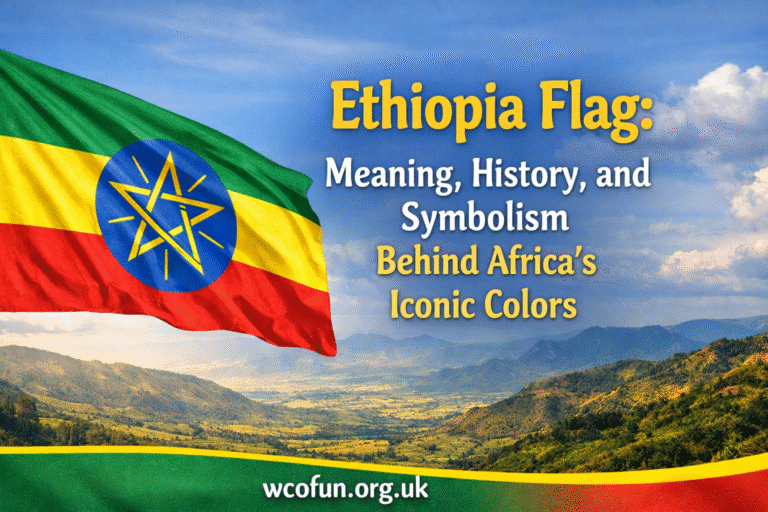
The central emblem of the Ethiopian flag features a blue circle with a golden star and rays. This symbol was introduced to represent unity and equality among the country’s diverse ethnic and cultural groups.
The star is a powerful representation of unity, while the rays extending outward symbolize hope and the bright future of the nation. It also reflects the idea that all citizens, regardless of background, are equal under the state.
Over time, the emblem has been slightly modified, but its core meaning has remained consistent: unity in diversity. It reflects Ethiopia’s effort to maintain harmony among its many communities.
Evolution of the Ethiopia Flag Design
The Ethiopian flag has undergone several transformations, particularly during major political shifts. During the imperial era, the flag was closely associated with monarchy and religious symbolism. Later, during the Derg regime, a different emblem was introduced, reflecting socialist ideology.
In the 1990s, after political transition, Ethiopia adopted a version closer to the modern design with the star emblem. Each change reflected the political and ideological direction of the country at the time.
Despite these changes, the core tricolor design has remained stable, showing its strong cultural importance and national acceptance.
Ethiopia Flag and Pan-Africanism
The Ethiopian flag has played a major role in shaping Pan-African identity. Ethiopia was never colonized in the same way as many African nations, making it a powerful symbol of resistance and independence.
Many African liberation movements adopted green, yellow, and red colors inspired by Ethiopia. These colors became known as Pan-African colors, representing unity, freedom, and shared struggle across the continent.
The influence of the Ethiopian flag extends beyond national borders, making it one of the most important symbols in African political and cultural history.
Historical Flag Variations
Ethiopia’s flag history includes several variations depending on political periods. During the monarchy, flags often included imperial symbols such as lions and crowns. These reflected royal authority and religious legitimacy.
During the Derg regime, a new emblem was introduced that emphasized socialist ideology. This version was quite different from earlier designs and represented a shift in political direction.
After the early 1990s, Ethiopia transitioned to a federal system and adopted a flag closer to the current version. Each variation tells a story about the country’s evolving identity.
Cultural Significance of the Ethiopia Flag
The Ethiopian flag holds deep cultural significance and is widely respected in everyday life. It is displayed during national holidays, religious ceremonies, and cultural festivals.
For Ethiopians living abroad, the flag is a strong symbol of identity and connection to their homeland. It helps maintain cultural unity within the global diaspora.
The flag also appears in music, art, and fashion, reinforcing its importance in modern cultural expression.
Flag Etiquette and Protocol
Proper respect for the Ethiopian flag is an important part of national tradition. It is usually displayed prominently on government buildings and during official events.
The flag should always be kept clean and properly positioned. It is treated with dignity, reflecting respect for the nation itself.
During national ceremonies, specific protocols are followed to ensure the flag is honored appropriately.
Ethiopia Flag in Comparison with Other African Flags
Many African flags share similar colors inspired by Ethiopia. The green-yellow-red combination is widely used across the continent, symbolizing African unity and independence.
However, Ethiopia’s flag remains unique due to its historical continuity and central emblem. Unlike many other flags, it represents one of the oldest nations in Africa with an unbroken identity.
This makes the Ethiopian flag both a national symbol and a continental inspiration.
Global Recognition of the Ethiopia Flag
The Ethiopian flag is widely recognized in international forums, including the United Nations and global sporting events. It represents not just a country but a long historical legacy.
In the diaspora, it is commonly displayed during cultural festivals and community gatherings. It serves as a reminder of shared heritage and identity.
Its influence continues to grow as Ethiopia plays a larger role in international affairs.
Interesting Facts About the Ethiopia Flag
One interesting fact is that Ethiopia is often associated with never having been fully colonized, which adds symbolic strength to its flag.
Another notable aspect is its influence on the Rastafarian movement, which adopted Ethiopian colors as a symbol of spiritual identity.
The flag is also one of the oldest continuously used national color schemes in the world.
Modern Usage of the Ethiopia Flag
Today, the Ethiopian flag is used widely in government institutions, schools, and public events. It is also prominent in sports, especially during international competitions.
In the digital age, the flag appears frequently on social media and global platforms, representing national pride.
Its usage continues to evolve while maintaining strong traditional roots.
Conclusion
The flag of Ethiopia is far more than a national symbol. It represents centuries of history, cultural depth, and political evolution. Its green, yellow, and red colors carry powerful meanings tied to land, peace, and sacrifice.
From its imperial origins to its modern design, the flag has remained a constant symbol of unity and resilience. It also holds a unique place in African history as a source of inspiration for Pan-African identity.
Ultimately, the Ethiopian flag stands as a reminder of endurance, pride, and the enduring strength of a nation with one of the richest histories in the world.
Also Read: dennis bowman
About the Author